Rechargeable AAA batteries offer a sustainable and cost-effective alternative to disposable alkaline batteries, providing power for countless devices from remote controls to wireless mice. The two primary types are Nickel-Metal Hydride (NiMH) and 1.5V Lithium-ion (Li-ion), each suited for different applications based on voltage, capacity, and cycle life. NiMH batteries, operating at 1.2V, are widely compatible and offer hundreds to thousands of charge cycles, while 1.5V Li-ion batteries provide a consistent 1.5V output, ideal for voltage-sensitive devices, though typically with fewer charge cycles.
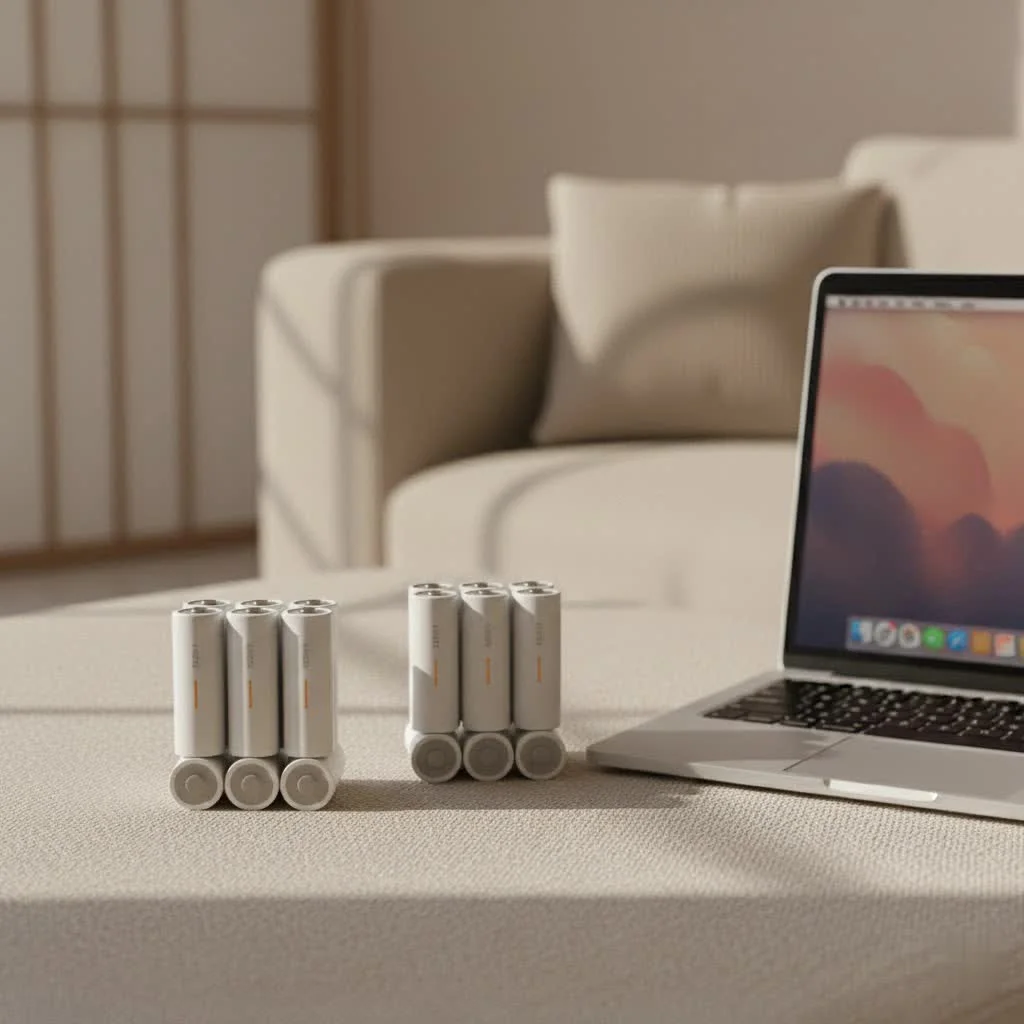
At Kiedl.com, we are dedicated to bringing you insightful, accurate, and easy-to-understand information on rechargeable batteries. With over a decade of hands-on R&D experience in battery chemistry and charging technologies, our goal is to empower you to make informed decisions, ensuring your devices run optimally while contributing to a greener planet. For shop curated rechargeable batteries on this site.
Unpacking the Powerhouses: Types of Rechargeable Triple A Batteries
When you venture into the world of rechargeable triple A batteries, you’ll primarily encounter two main chemistries: Nickel-Metal Hydride (NiMH) and the more recent 1.5V Lithium-ion (Li-ion) variants. Each has its unique characteristics, making them suitable for different applications.
NiMH: The Reliable Workhorse
Nickel-Metal Hydride (NiMH) batteries have long been the go-to choice for rechargeable AA and AAA sizes. They offer a fantastic balance of performance, affordability, and wide compatibility.
How They Work: NiMH batteries operate at a nominal voltage of 1.2 volts. While this is slightly lower than the 1.5 volts of a fresh alkaline battery, most electronic devices are designed with enough voltage tolerance to operate perfectly fine with NiMH cells. Their chemistry allows for efficient energy storage and release, making them highly effective.
Pros:
- Durability and Cycle Life: Many NiMH cells boast an impressive lifespan, capable of being recharged hundreds, even thousands, of times. Some premium models, like standard Panasonic Eneloops, are rated for up to 2100 charge cycles, offering years of reliable power.
- Commonality and Compatibility: NiMH batteries are widely available and compatible with the vast majority of devices that use AAA batteries. You’ll find chargers readily available, and many devices are explicitly designed to work with their 1.2V output.
- Low Self-Discharge (LSD) Variants: Modern NiMH batteries, often labeled “Low Self-Discharge” or “Pre-charged,” maintain their charge for extended periods even when not in use. This means you can charge them up, store them, and they’ll still be ready to go months later, often retaining 70-80% of their charge after a year.
Cons:
- Voltage Compatibility: In some sensitive or older devices specifically expecting a full 1.5V from an alkaline battery, a 1.2V NiMH might trigger a “low battery” warning prematurely or cause the device to perform sub-optimally.
- Weight: Generally heavier than their Li-ion counterparts.
- Temperature Sensitivity: While some are rated for colder temperatures (down to -20°C), extreme cold can still impact their performance and capacity.
Popular Examples: You’ll frequently hear about Panasonic Eneloop (both standard and high-capacity ‘Pro’ versions), Energizer Recharge Power Plus, EBL, and even Ikea LADDA batteries, which are often considered re-branded Eneloop cells due to their similar performance.
Li-ion 1.5V: The Modern Marvel
|
Our Picks for the Best Rechargeable Batteries in 2026
As an Amazon Associate I earn from qualifying purchases.
|
||
| Num | Product | Action |
|---|---|---|
| 1 | Amazon Basics 4-Bay Battery Charger for AA & AAA Rechargeable Batteries with Rechargeable AA NiMh Batteries, 4 count (Pack of 1), Type A (American) Plug, Black |

|
| 2 | Amazon Basics 24-Pack Rechargeable AA NiMH Batteries, 2000 mAh, 1.2V, Recharge up to 1000x Times, Pre-Charged |
|
| 3 | EBL 16 Sets AA AAA Batteries Combo with 8PCS AA 2300mAh & 8-Pack AAA 800mAh Rechargeable Batteries |
|
| 4 | Amazon Basics 12-Pack Rechargeable AA NiMH Performance Batteries, 2000 mAh, 1.2V, Recharge up to 1000x Times, Pre-Charged |
|
| 5 | Amazon Basics NiMh Rechargeable Batteries (4 AA & 4 AAA) with 4 Bay Battery Charger, Type A (American) Plug, Black, 8 Count |
|
| 6 | Amazon Basics 12-Pack Rechargeable AAA NiMH Performance Batteries, 800 mAh, 1.2V, Recharge up to 1000x Times, Pre-Charged |
|
| 7 | Amazon Basics 16-Pack Rechargeable AA NiMH Batteries, 2000 mAh, 1.2V, Recharge up to 1000x Times, Pre-Charged |
|
| 8 | Amazon Basics 24-Pack Rechargeable AAA NiMH Performance Batteries, 800 mAh, 1.2V, Recharge up to 1000x Times, Pre-Charged |
|
| 9 | POWEROWL Rechargeable AA and AAA Batteries with Fast Charger, High Capacity NiMH - 4 x 2800mAh AA & 4 x 1000mAh AAA |
|
| 10 | EBL AA 2300mAh (8 Pack) and AAA 1100mAh (8 Pack) Ni-MH Rechargeable Batteries and AA AAA Rechargeable Battery Charger with 2 USB Charging Ports |
|
A newer player in the AAA rechargeable arena is the 1.5V Lithium-ion battery. These are essentially Li-ion cells with an internal step-down converter to regulate the voltage to a constant 1.5 volts, mirroring alkaline batteries.
How They Work: Inside, these batteries contain a higher voltage Li-ion cell (typically 3.7V) and a small circuit that converts this voltage down to a steady 1.5V. This constant voltage output is their main distinguishing feature.
Pros:
- Consistent 1.5V Output: This is their biggest advantage, ensuring compatibility with devices that are very sensitive to voltage drops, performing exactly like a fresh alkaline battery until completely depleted.
- Lighter Weight: Li-ion batteries are generally lighter than NiMH, which can be beneficial for some portable devices.
- Often Faster Charging: Many 1.5V Li-ion AAA batteries feature integrated USB-C charging ports, allowing for convenient and often quicker recharging without a dedicated external charger.
Cons:
- Higher Cost: These batteries typically come with a higher upfront price tag.
- Fewer Charge Cycles: While they offer constant voltage, their cycle life can be lower than that of high-quality NiMH, often ranging from 400 to 1000 cycles.
- Charger Specificity: You cannot charge a 1.5V Li-ion battery in a standard NiMH charger; they require their own specific charging method, often via USB-C.
- Potential Interference: Some models, due to their internal conversion circuitry, might produce electromagnetic interference that can affect sensitive devices like radio clocks or certain audio equipment.
- Sudden Cut-off: Because they maintain a constant 1.5V until depletion, devices powered by these batteries might shut off abruptly without the gradual warning signs you’d get from NiMH or alkaline cells.
A Brief Note on NiCd
While historically significant, Nickel-Cadmium (NiCd) batteries are largely obsolete for consumer AAA sizes due to their “memory effect” (where they lose capacity if not fully discharged before recharging) and environmental concerns regarding cadmium. NiMH batteries have effectively replaced them.
Choosing Your Perfect Pair: What to Look for in Rechargeable Triple A Batteries
Selecting the right rechargeable AAA batteries for your needs involves understanding a few key specifications and considering your specific use cases.
Voltage: The 1.2V vs. 1.5V Dilemma
Most devices are designed to work with the 1.2V nominal voltage of NiMH batteries. However, if you have devices like certain flashlights, digital cameras, or medical instruments that absolutely demand a constant 1.5V, then 1.5V Li-ion rechargeable triple A batteries might be your best bet. For most everyday gadgets like remote controls, wireless keyboards, or low-drain toys, 1.2V NiMH batteries are perfectly adequate and often more economical.
Capacity (mAh): Powering Your Devices Longer
Capacity, measured in milliampere-hours (mAh), indicates how much energy a battery can store and deliver. A higher mAh rating means longer runtime between charges. AAA rechargeable batteries typically range from 500mAh to 1100mAh. For example, a standard Panasonic Eneloop AAA offers around 800mAh, while an Eneloop Pro AAA boasts 930mAh. Consider your device’s power requirements: high-drain devices (like camera flashes) benefit from higher capacity, while low-drain devices (like TV remotes) will still perform excellently with lower capacity cells.
Cycle Life: How Many Times Can You Recharge?
This refers to the number of times a battery can be recharged before its capacity significantly degrades. NiMH batteries often lead in this category, with some offering over 2000 cycles. Li-ion 1.5V batteries usually have a lower cycle count, commonly in the hundreds. If you prioritize long-term reusability over many years, high-cycle NiMH batteries are a strong contender.
Self-Discharge Rate: Holding Their Charge
For devices you don’t use every day, a low self-discharge rate is crucial. Modern “LSD NiMH” batteries excel here, retaining a significant portion of their charge for months or even a year in storage. If you frequently pick up a device after a long hiatus, these are ideal. Standard Li-ion batteries also have very low self-discharge, but for 1.5V AA/AAA with converters, this can vary.
Compatibility & Charger Type
Always ensure your charger is compatible with your battery chemistry. NiMH chargers are designed for NiMH batteries, and 1.5V Li-ion batteries require their specific chargers (often integrated USB-C). Never attempt to charge a NiMH battery with a Li-ion charger or vice versa, as this can be dangerous.
Mastering the Charge: Best Practices for Longevity
Proper charging is the bedrock of extending the life of your rechargeable triple A batteries. Treat them well, and they’ll serve you for years.
Using the Right Charger
This cannot be stressed enough: Always use a charger designed for the specific chemistry of your rechargeable AAA batteries. For NiMH, use a NiMH charger. For 1.5V Li-ion, use its dedicated charger, often a USB-C port directly on the battery. Using the wrong charger can damage the battery, pose a fire risk, or even cause an explosion. Look for “smart” chargers that can detect battery type, condition, and automatically stop charging when full, preventing overcharging.
Avoiding Overcharging and Deep Discharges
While modern smart chargers help prevent overcharging, it’s generally good practice to remove batteries once fully charged. For NiMH batteries, while they are more forgiving than older NiCd cells, regularly draining them completely (deep discharge) can slightly reduce their overall lifespan. Aim to recharge them when they are about 20-30% depleted if possible. Lithium-ion batteries with step-down converters are designed to manage their discharge profile, but internal cells still benefit from avoiding extreme full depletion.
Optimal Charging Environment
Charge your batteries at room temperature, ideally between 15°C and 25°C (59°F to 77°F). Extreme heat or cold during charging can negatively impact battery performance and longevity.
Speed vs. Longevity
Fast chargers can be convenient, but they often generate more heat, which can stress the battery and potentially shorten its lifespan over time. If you’re not in a hurry, a slower charge rate is generally kinder to your rechargeable triple A batteries, promoting healthier cycles and longer life.
Safety First: Handling and Storing Your Rechargeable AAA Batteries
Safety isn’t just a buzzword; it’s a critical aspect of battery ownership. As a leading electronic engineer, I emphasize that understanding and following safety guidelines is paramount for both your well-being and the longevity of your rechargeable AAA batteries.
General Safety Tips
- Inspect Regularly: Before charging or inserting into a device, visually inspect your rechargeable triple A batteries for any signs of damage, swelling, or leakage. Discard any compromised batteries responsibly.
- No Mixing: Never mix different battery chemistries (e.g., alkaline with NiMH), brands, or even old and new rechargeable batteries in the same device or charger. This can lead to inefficient operation, leakage, or damage.
- Correct Polarity: Always insert batteries correctly, matching the positive (+) and negative (-) terminals as indicated by the device or charger.
- Never Charge Non-Rechargeables: Attempting to charge standard alkaline or lithium primary (non-rechargeable) AAA batteries is extremely dangerous and can lead to leakage, fire, or explosion. Always check the battery label!
Ideal Storage Conditions
- Cool and Dry: Store your rechargeable AAA batteries in a cool, dry place away from direct sunlight, extreme temperatures, and high humidity. An ideal storage temperature is around room temperature.
- Remove from Idle Devices: For devices that won’t be used for an extended period, remove the batteries. This prevents parasitic drain and potential leakage, especially important for NiMH batteries.
- Partial Charge for Storage: For long-term storage, NiMH batteries are best stored at around 50-70% charge. This helps maintain their chemical stability.
When to Replace
Rechargeable batteries don’t last forever. You’ll know it’s time to replace your rechargeable triple A batteries when:
- Their runtime significantly decreases, even after a full charge.
- They drain much faster than usual.
- They show physical damage like swelling, leakage, or corrosion.
- They consistently fail to hold a charge.
Beyond the Battery: Environmental Impact and Recycling
Choosing rechargeable triple A batteries is a fantastic step toward reducing environmental waste. Every time you recharge a battery instead of throwing out a disposable one, you’re making a positive impact.
Reducing Waste
A single rechargeable AAA battery can replace hundreds, or even thousands, of disposable alkaline batteries over its lifetime. This significantly reduces the amount of hazardous waste entering landfills and conserves the raw materials needed for new battery production.
Where to Recycle
Even rechargeable batteries have a finite life. When they eventually wear out, it’s crucial to recycle them properly. Look for dedicated battery recycling drop-off points at electronic stores, hardware stores, community centers, or specialized recycling facilities. Never dispose of rechargeable batteries in your regular household trash.
Frequently Asked Questions About Rechargeable Triple A Batteries
How long do rechargeable AAA batteries typically last?
Rechargeable AAA batteries, particularly NiMH types, typically last between 2 to 3 years or 500 to 1,000 charge cycles with proper care. High-quality brands and optimal charging habits can extend this further. Factors like usage frequency, device power demands, and storage conditions also play a big role in their overall lifespan.
Can I use NiMH rechargeable AAA batteries in any device?
Most modern electronic devices are compatible with 1.2V NiMH rechargeable AAA batteries, even if they originally came with 1.5V alkaline ones. However, some very sensitive or older devices might experience issues like premature “low battery” warnings or reduced performance due to the slightly lower nominal voltage.
Is it worth investing in rechargeable AAA batteries?
Absolutely! While the upfront cost is higher than disposable batteries, the long-term savings are substantial. Over their lifespan, rechargeable AAA batteries can save you hundreds of dollars. Plus, they are a much more environmentally friendly choice, significantly reducing waste.
Do all rechargeable AAA batteries require a special charger?
Yes, all rechargeable batteries require a charger specifically designed for their chemistry. NiMH batteries need a NiMH charger, and 1.5V Li-ion rechargeable AAA batteries (which contain internal converters) require their own compatible charger, often via a built-in USB-C port. Never use an incompatible charger.
What’s the difference between mAh and mWh?
mAh (milliampere-hour) measures electrical charge capacity, indicating how much current a battery can deliver over an hour. mWh (milliwatt-hour) measures actual energy stored, which considers both voltage and current. While mAh is commonly used, mWh gives a more accurate comparison of total energy, especially when comparing batteries with different nominal voltages.
Conclusion: Empowering Your Devices, Protecting Our Planet
Rechargeable triple A batteries are a smart, sustainable, and powerful choice for your everyday electronics. By understanding the differences between NiMH and 1.5V Li-ion, choosing the right type for your devices, and following best practices for charging and storage, you can unlock years of reliable power. “Embracing rechargeable batteries is not just a smart economic choice, it’s a vital step towards a sustainable future for our planet,” says Dr. Anja Sharma, a seasoned researcher in advanced battery materials.
At Kiedl.com, we believe that informed choices lead to better outcomes – for your gadgets, your wallet, and our environment. We encourage you to explore the world of rechargeable batteries further and make the switch. Your devices will thank you, and so will the planetFeel free to share your experiences and tips with us.
Extend the Life of Rechargeable AAA Batteries
Follow these best practices to maximize the lifespan and performance of your rechargeable AAA batteries, ensuring years of reliable power for your devices.
Always use a charger specifically designed for your battery's chemistry (NiMH for NiMH, dedicated for 1.5V Li-ion). Using an incompatible charger can damage the battery or pose a safety risk. Look for smart chargers that prevent overcharging.
Remove batteries once fully charged to prevent overcharging. For NiMH, recharge when they are about 20-30% depleted rather than fully draining them, which can slightly reduce their lifespan. Li-ion batteries also benefit from avoiding extreme full depletion.
Charge your batteries at room temperature, ideally between 15u00b0C and 25u00b0C (59u00b0F to 77u00b0F). Extreme temperatures during charging can negatively impact battery performance and longevity. Avoid fast chargers if longevity is a priority.
Store rechargeable AAA batteries in a cool, dry place away from direct sunlight and extreme temperatures. For long-term storage, NiMH batteries are best stored at around 50-70% charge. Remove batteries from idle devices to prevent parasitic drain.
Regularly inspect batteries for damage, swelling, or leakage. Replace batteries when their runtime significantly decreases, they drain faster than usual, or show physical damage. Never mix different battery chemistries or brands in the same device.
Get our weekly buyer guide
Practical specs, not advice. Unsubscribe anytime.

These rechargeable triple A batteries are okay for my TV remote, but I found them a bit tricky to charge with my old charger. It seems like some chargers aren’t fully compatible with all types, which was a bit frustrating. They do hold a charge for a decent amount of time once they’re full, though.
I’ve been slowly switching all my devices over to rechargeable batteries and these AAA’s are a game changer. My wireless mouse used to eat through disposables so fast, but with these NiMH batteries, it lasts for weeks and I just pop them on the charger. Definitely saving money in the long run and feeling better about less waste.
Finally got around to upgrading my kids’ toys to rechargeable AAAs and it’s been fantastic. The capacity on these is really impressive; their remote control cars and handheld games last so much longer now. No more scrambling for new batteries every other day, which is a huge win for my sanity and wallet.
I picked up a pack of the 1.5V Li-ion AAA batteries for my smart home sensors, which are pretty voltage-sensitive. They’ve been working great, providing consistent power and no drop-offs like I sometimes got with older NiMHs. My only minor complaint is that the cycle life seems a bit lower than what I’m used to, but for the stable voltage, it’s worth it.