Ever wonder what keeps those charming solar garden lights glowing long after the sun dips below the horizon? It’s the unsung heroes nestled inside: AAA solar rechargeable batteries. As your dedicated experts at Kiedl.com, we’re here to shine a light on these essential power sources, helping you understand, choose, and care for them like a pro. Forget disposable headaches; these tiny powerhouses are key to sustainable, efficient outdoor illumination.
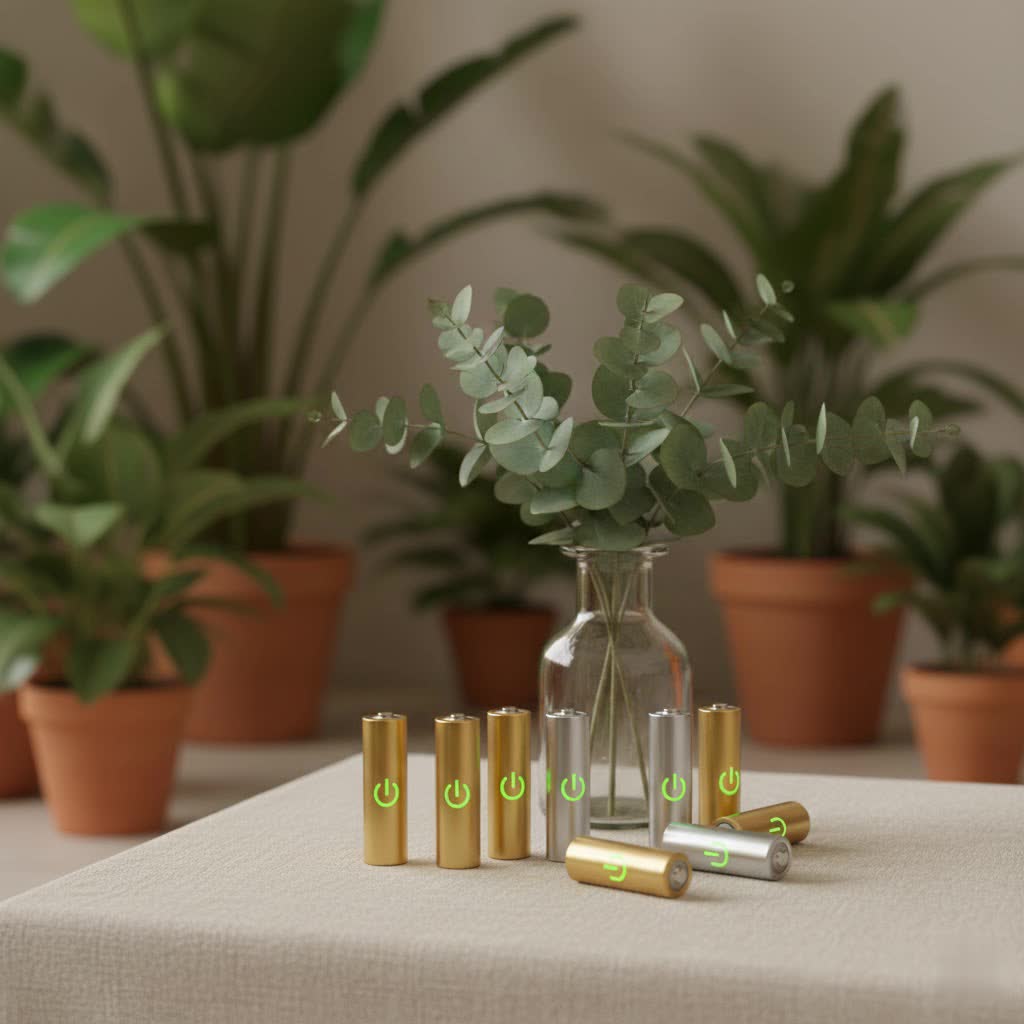
We’ve all been there – a beautiful array of solar lights, only to find them dim or completely dark too soon. Often, the culprit isn’t the sun, but the battery within. Understanding the nuances of AAA solar rechargeable batteries isn’t just about saving money; it’s about making smarter, greener choices for your home and the planet. Let’s dive deep into the world of rechargeable power and unlock the full potential of your solar-powered devices.
The Heart of Your Outdoor Glow: How AAA Solar Rechargeable Batteries Work
At its core, a solar-powered device is a miniature energy ecosystem. It begins with a photovoltaic (PV) panel, the part that soaks up sunlight. This panel converts the sun’s photons into direct current (DC) electricity. But here’s the clever bit: because the sun isn’t always shining, this electricity isn’t used immediately. Instead, it’s sent to charge a special battery – a AAA solar rechargeable battery.
This battery acts as an energy reservoir, diligently storing every bit of power it receives throughout the day. When dusk falls and the solar panel stops generating electricity, a sensor triggers the light to turn on, drawing power from the fully charged battery. This cycle of charging during the day and discharging at night is the fundamental principle. The efficiency of this entire process, from sunlight capture to nighttime illumination, hinges significantly on the quality and characteristics of the AAA solar rechargeable battery.
Demystifying the Chemistry: NiMH vs. NiCd for Solar Applications
When you’re looking at AAA solar rechargeable batteries, you’ll primarily encounter two chemical compositions: Nickel-Metal Hydride (NiMH) and Nickel-Cadmium (NiCd). Each has its own story, its strengths, and its ideal applications.
Nickel-Metal Hydride (NiMH): The Modern Standard
|
Our Picks for the Best Rechargeable Batteries in 2026
As an Amazon Associate I earn from qualifying purchases.
|
||
| Num | Product | Action |
|---|---|---|
| 1 | Amazon Basics 24-Pack Rechargeable AAA NiMH Performance Batteries, 800 mAh, 1.2V, Recharge up to 1000x Times, Pre-Charged |

|
| 2 | Amazon Basics 4-Bay Battery Charger for AA & AAA Rechargeable Batteries with Rechargeable AA NiMh Batteries, 4 count (Pack of 1), Type A (American) Plug, Black |
|
| 3 | EBL 16 Sets AA AAA Batteries Combo with 8PCS AA 2300mAh & 8-Pack AAA 800mAh Rechargeable Batteries |
|
| 4 | Amazon Basics 16-Pack Rechargeable AA NiMH Batteries, 2000 mAh, 1.2V, Recharge up to 1000x Times, Pre-Charged |
|
| 5 | POWEROWL Rechargeable AA and AAA Batteries with Fast Charger, High Capacity NiMH - 4 x 2800mAh AA & 4 x 1000mAh AAA |
|
| 6 | Amazon Basics 24-Pack Rechargeable AA NiMH Batteries, 2000 mAh, 1.2V, Recharge up to 1000x Times, Pre-Charged |
|
| 7 | Amazon Basics 12-Pack Rechargeable AAA NiMH Performance Batteries, 800 mAh, 1.2V, Recharge up to 1000x Times, Pre-Charged |
|
| 8 | Amazon Basics 12-Pack Rechargeable AA NiMH Performance Batteries, 2000 mAh, 1.2V, Recharge up to 1000x Times, Pre-Charged |
|
| 9 | EBL AA 2300mAh (8 Pack) and AAA 1100mAh (8 Pack) Ni-MH Rechargeable Batteries and AA AAA Rechargeable Battery Charger with 2 USB Charging Ports |
|
| 10 | Amazon Basics NiMh Rechargeable Batteries (4 AA & 4 AAA) with 4 Bay Battery Charger, Type A (American) Plug, Black, 8 Count |
|
NiMH batteries are the go-to choice for most modern solar lights, and for good reason. They boast several advantages that make them superior for this specific application.
What makes NiMH stand out?
NiMH batteries typically offer a higher capacity (measured in milliampere-hours, or mAh) compared to their NiCd predecessors of the same size. This means they can store more energy, leading to longer illumination times for your solar lights. They also tend to have a significantly longer cycle life, meaning they can be recharged hundreds, sometimes even thousands, of times before their performance degrades. Furthermore, NiMH batteries are far more environmentally friendly, as they don’t contain toxic heavy metals like cadmium. They are also less prone to the “memory effect,” a phenomenon where a battery loses capacity if repeatedly recharged before being fully discharged. Many high-quality NiMH batteries, like the popular Panasonic Eneloop, are also designed with low self-discharge (LSD) properties, allowing them to retain their charge for extended periods even when not in use or during cloudy weather.
Nickel-Cadmium (NiCd): The Legacy Option
NiCd batteries were once the dominant rechargeable battery technology, but their presence has waned, especially in consumer electronics.
Why are NiCd batteries less common now?
While NiCd batteries are robust and perform well in high-drain devices, they come with a few notable drawbacks. Their capacity is generally lower than NiMH batteries, meaning shorter runtimes. They are also notoriously susceptible to the “memory effect,” which can severely limit their usable capacity over time if not properly maintained. The biggest concern, however, is environmental: cadmium is a toxic heavy metal, making proper disposal and recycling crucial. You might still find NiCd batteries in older solar lights, and in such cases, replacing them with new NiCd batteries of the same capacity can be a safe bet to ensure compatibility with the existing charging circuitry. However, for new purchases or replacements, NiMH is almost always the recommended choice.
Are Lithium-ion AAA Batteries an Option?
Lithium-ion (Li-ion) batteries are ubiquitous in our smartphones and laptops, known for their high energy density. While some specialized 1.5V Li-ion AAA batteries are available (often featuring a micro-USB charging port), they are generally not the primary recommendation for typical solar garden lights.
Why aren’t Li-ion common in solar lights?
Standard NiMH/NiCd AAA batteries operate at 1.2V. Most solar lights are designed to work with this voltage. While 1.5V Li-ion AAA batteries exist, they might not be compatible with all solar light charging circuits, potentially leading to overcharging or reduced lifespan of the battery or the light itself. Furthermore, the self-discharge characteristics and charging profiles optimized for NiMH make them a more reliable and cost-effective choice for the passive, low-current charging provided by small solar panels.
Cracking the Code: Essential Specifications for AAA Solar Rechargeable Batteries
Understanding the technical jargon associated with AAA solar rechargeable batteries is key to making an informed decision. These specifications tell you a lot about a battery’s performance, longevity, and suitability for your solar lights.
Capacity (mAh): The Powerhouse Metric
The capacity of a battery is measured in milliampere-hours (mAh). Simply put, mAh indicates how much electrical charge a battery can store.
What does mAh mean for your solar lights?
A higher mAh rating means the battery can hold more energy. For solar lights, this directly translates to how long your lights will stay on at night. If your solar lights have multiple LED bulbs or you want them to glow brightly for extended periods, opting for AAA solar rechargeable batteries with a higher mAh capacity (e.g., 800mAh to 1100mAh) will provide superior performance. Standard AAA NiMH batteries for solar applications typically range from 600mAh to 1100mAh.
Voltage (V): Keeping the Lights On
For AAA solar rechargeable batteries, the nominal voltage is almost universally 1.2V for both NiMH and NiCd chemistries.
Why is voltage important?
It’s crucial to match the battery voltage to what your device is designed for. Most solar garden lights are engineered to operate with 1.2V rechargeable batteries. Using batteries with a different voltage (e.g., trying to force a 1.5V alkaline battery or a higher voltage Li-ion battery into a 1.2V system) can damage the light’s circuitry or prevent the battery from charging correctly.
Charge Cycles: Longevity in Numbers
Charge cycles refer to the number of times a rechargeable battery can be fully charged and discharged before its capacity significantly drops.
How many cycles should you look for?
The more charge cycles a battery can withstand, the longer its overall lifespan. High-quality NiMH AAA rechargeable batteries can offer anywhere from 500 to over 2100 charge cycles. For instance, Panasonic Eneloop batteries are renowned for their exceptional cycle life, often exceeding 2000 cycles. While a battery might technically last for years, consistent daily cycling in a solar light means cycle life is a critical factor for long-term performance.
Low Self-Discharge (LSD): Ready When You Are
Low Self-Discharge (LSD) technology, often found in modern NiMH batteries, means the battery retains its charge for a much longer period when not in use or when the solar panel isn’t actively charging.
Why is LSD crucial for solar applications?
Imagine a string of cloudy days. A regular rechargeable battery might lose a significant portion of its charge just sitting there, leading to dim or non-existent light at night. LSD batteries minimize this passive energy loss, ensuring that even after a few dreary days, they still have enough juice to power your lights effectively. This feature significantly enhances the reliability and convenience of your AAA solar rechargeable batteries, especially for outdoor use where consistent charging isn’t guaranteed.
Choosing Your Champion: Selecting the Best AAA Solar Rechargeable Batteries
Navigating the market for AAA solar rechargeable batteries can feel a bit like a treasure hunt. With so many options, how do you pick the right ones that will truly make your solar lights shine?
First off, consider the demands of your specific solar device. Most solar garden lights are relatively low-drain, meaning they don’t draw a lot of power at once. For these, a good quality NiMH battery with a decent capacity (600mAh to 1000mAh) and a high number of charge cycles will serve you well. If you’re replacing existing batteries, it’s often best to stick with the same chemistry (NiMH for NiMH, NiCd for NiCd), especially for older lights, to ensure optimal compatibility with the light’s internal charging circuit.
Look for brands with a proven track record. Names like Panasonic Eneloop, Tenergy Solla, and EBL often come up in discussions about reliable rechargeable batteries for solar lights. These brands typically offer a balance of good capacity, strong cycle life, and low self-discharge properties. Don’t solely focus on the highest mAh; sometimes a slightly lower capacity battery from a reputable brand with excellent LSD and cycle life will outperform a higher mAh, no-name battery.
“Choosing the right AAA solar rechargeable battery is less about finding the most powerful one, and more about finding the most compatible and reliable one for your specific solar setup,” advises Dr. Anya Sharma, a lead battery materials scientist at Kiedl.com. “Prioritize known brands with good low self-discharge rates and a solid cycle life, as these factors contribute most to long-term satisfaction in outdoor solar applications.”
Maximizing Your Investment: Tips for Using and Maintaining AAA Solar Rechargeable Batteries
You’ve invested in quality AAA solar rechargeable batteries, so let’s make sure they last. Proper usage and maintenance can significantly extend their lifespan and ensure your solar lights perform optimally.
1. Initial Charge is Key: When you first get your new rechargeable batteries, even if they’re “pre-charged,” it’s always a good practice to give them a full charge using a dedicated NiMH battery charger if possible. This helps to condition the batteries and ensures they start their life cycle with maximum capacity.
2. Optimal Solar Panel Placement: This seems obvious, but it’s vital. Ensure your solar lights are placed in a location that receives direct, unobstructed sunlight for the majority of the day. Any shade from trees, buildings, or even dirt can drastically reduce charging efficiency.
3. Keep Solar Panels Squeaky Clean: Dust, dirt, pollen, and even bird droppings can accumulate on solar panels, creating a barrier that prevents sunlight from reaching the photovoltaic cells. Regularly wipe down the solar panels with a soft, damp cloth to ensure maximum light absorption.
4. Avoid Extreme Temperatures: While many outdoor solar lights are designed to withstand varying weather, extreme heat or cold can degrade battery performance and shorten their lifespan. If you live in an area with brutal winters or scorching summers, consider bringing your solar lights indoors during the most extreme periods.
5. Understand Seasonal Performance: Expect variations in light duration throughout the year. In winter, shorter daylight hours and weaker sun intensity mean less charging, resulting in shorter illumination times at night. This is normal, not necessarily a sign of failing batteries.
6. Know When to Replace: Even the best rechargeable batteries have a finite lifespan. If your solar lights are significantly dimmer than they used to be, or only stay on for a very short period despite adequate sun exposure, it’s likely time to replace the AAA solar rechargeable batteries. Typically, this might be every 1-3 years depending on quality and usage, but some premium batteries can last longer.
The Green Glow: Recycling Your AAA Rechargeable Batteries
One of the significant advantages of using AAA solar rechargeable batteries is their positive impact on the environment. By reusing batteries hundreds or even thousands of times, you drastically reduce the waste generated by single-use alkaline batteries. However, even rechargeable batteries reach the end of their useful life and must be disposed of responsibly.
It’s absolutely crucial not to throw rechargeable batteries, especially NiCd batteries (due to their cadmium content) or even NiMH, into your regular household trash. These batteries contain valuable materials that can be recovered and reused, and hazardous materials that, if landfilled, can leach into the environment.
How to recycle your used AAA rechargeable batteries:
Look for designated battery recycling drop-off points in your community. Many electronics stores, hardware stores, and municipal recycling centers offer collection services for rechargeable batteries. Websites like Call2Recycle.org provide an excellent resource for finding nearby recycling locations. By taking a few extra steps to properly recycle your spent batteries, you’re completing the eco-friendly cycle and contributing to a healthier planet.
Frequently Asked Questions about AAA Solar Rechargeable Batteries
What type of AAA rechargeable batteries are best for solar lights?
For most solar lights, Nickel-Metal Hydride (NiMH) AAA rechargeable batteries are highly recommended. They offer a good balance of capacity, cycle life, and environmental friendliness.
How long do AAA solar rechargeable batteries typically last?
A good quality AAA NiMH rechargeable battery in a solar light can last anywhere from 1 to 3 years, sometimes longer with optimal care. Their lifespan is measured in charge cycles, usually ranging from 500 to over 2000 cycles.
Can I use regular alkaline AAA batteries in my solar lights?
No, you should not use regular alkaline AAA batteries in solar lights. Solar lights are designed to recharge batteries, and alkaline batteries are not meant to be recharged; attempting to do so can cause them to leak, overheat, or even explode.
What mAh capacity is best for AAA solar rechargeable batteries?
For solar garden lights, a higher mAh capacity (e.g., 600mAh to 1100mAh) is generally better. A higher mAh means the battery can store more energy, leading to longer illumination times at night.
Do AAA solar rechargeable batteries come pre-charged?
Many modern NiMH AAA rechargeable batteries, including those suitable for solar lights, come pre-charged and are ready to use right out of the package. However, it’s often a good idea to fully charge them before the first use for optimal performance.
Why are my solar lights dim or not working even after a sunny day?
This often indicates that the AAA solar rechargeable batteries are reaching the end of their life and can no longer hold a sufficient charge. Other reasons could be dirty solar panels, insufficient sunlight exposure, or a fault in the light’s circuitry.
Is it okay to mix NiMH and NiCd batteries in solar lights?
It’s generally not recommended to mix battery chemistries. If your solar light originally came with NiCd batteries, replacing them with new NiCd batteries of the same capacity might be best, but in most cases, replacing older NiCd batteries with new NiMH batteries is a common and often beneficial upgrade, provided the solar light’s charging circuit can handle it. When in doubt, stick to the original chemistry or consult the light’s manual.
Empowering Your Outdoor World with Sustainable Light
The journey through the world of AAA solar rechargeable batteries reveals them as much more than just power cells; they are key enablers of sustainable living and beautiful outdoor spaces. From understanding the superior chemistry of NiMH to decoding essential specifications like mAh and charge cycles, you’re now equipped with the knowledge to make smart decisions.
At Kiedl.com, we believe in empowering you with expertise that translates into real-world benefits. By choosing the right batteries, caring for them diligently, and committing to proper recycling, you’re not just ensuring your solar lights glow brightly; you’re also contributing to a healthier planet. So go ahead, confidently select your next set of AAA solar rechargeable batteries, and let your outdoor world illuminate with efficiency and responsibility. Share your experiences and tips with us – together, we can make every glow a green one!